|
Még több magyarázat:
A videót a múzeumi audioguide részleteinek felhasználásával Bánfalvi-Orosz Eszter, a múzeumpedagógiai tartalmakat Dancz Vera készítette.
A videóban és a tananyagban szereplő műtárgyak:
OMZSA egyedi dokumentumai OMZSA iratai Örkényi Strasser István: OMZSA emlékplakett A teljes Haggada elérhető online az Országos Rabbiképző - Zsidó Egyetem könyvtárának digitalizált gyűjteményében, itt. A videót a múzeumi audioguide részleteinek felhasználásával Nemecsek Panni, a múzeumpedagógiai tartalmakat Dancz Vera készítette. A videóban bemutatott műtárgy: Ón szédertál Továbbiak a megjelenés sorrendjében: Amszterdami Haggada Velencei Haggada Metzi Haggada Szédertál takaró Herendi szédertál Játsszunk! 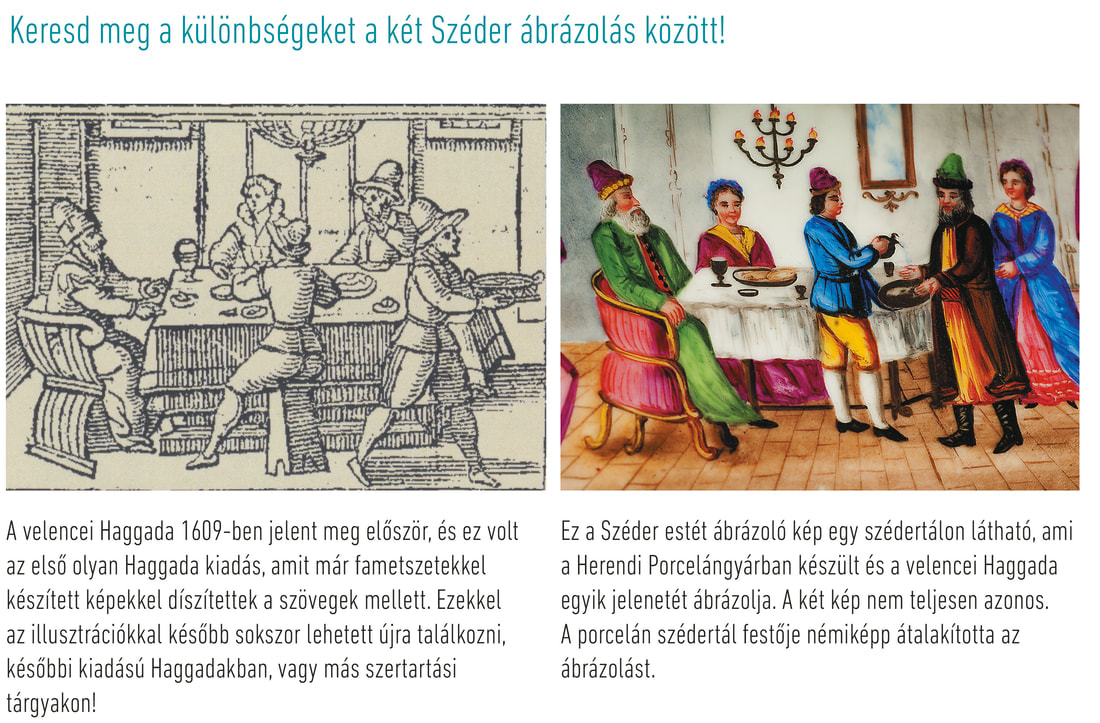 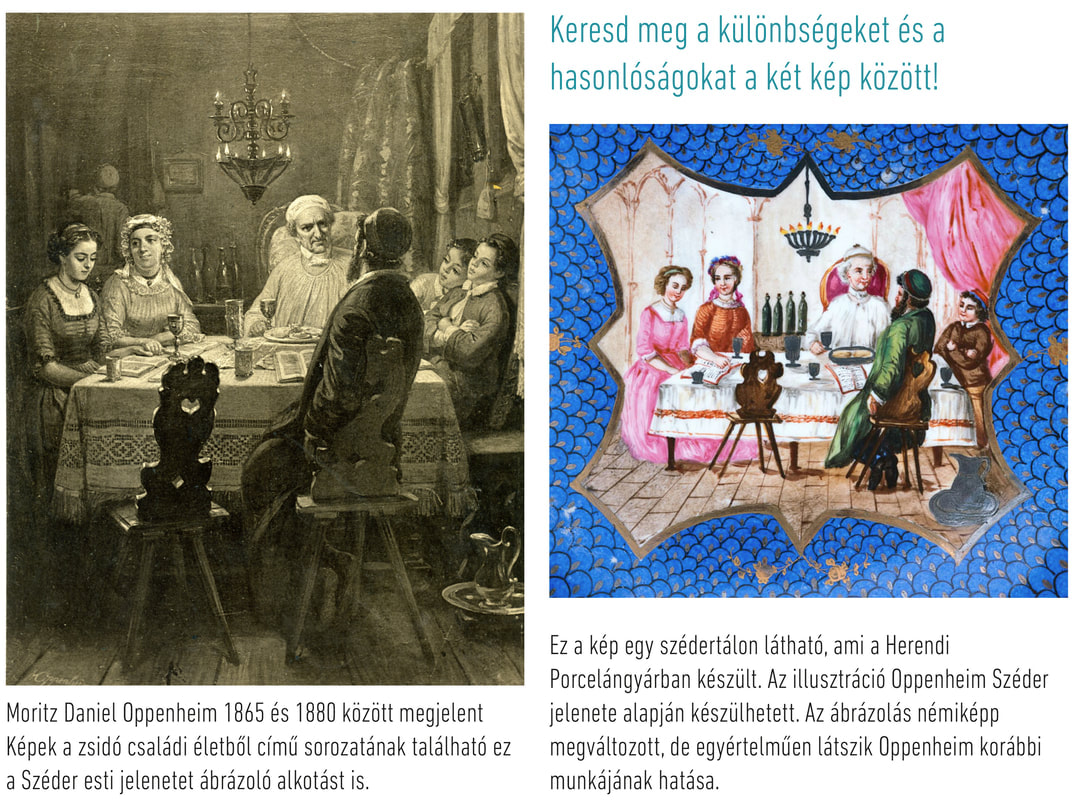 A videót a múzeumi audioguide részleteinek felhasználásával Bánfalvi-Orosz Eszter, a múzeumpedagógiai tartalmakat Dancz Vera készítette.
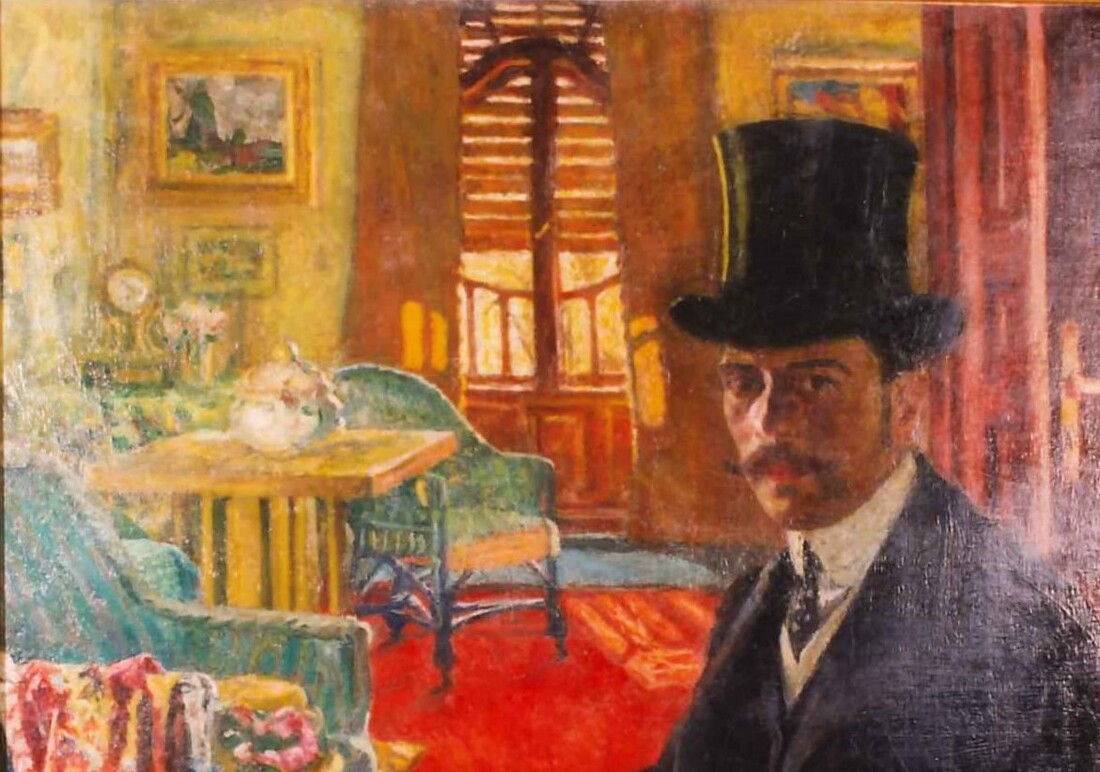 Perlmutter Izsák jómódú, zsidó polgári családból származott, felmenői anyagi és szellemi szempontból is támogatták festőművészi pályáját. Perlmutternek nemcsak arra nyílt lehetősége, hogy külföldön tanuljon, hanem a századfordulót követő években hosszú éveket tölthetett el Franciaországban és Hollandiában, ahol nívós kiállításokon szerepelt, díjakkal tüntették ki, nemzetközi sikereket aratott. A kortársaihoz képest mindmáig kevéssé ismert művész – vérbeli koloristaként– – a színértékeket rendkívűl alaposan tanulmányozta, és kivételes virtuozitással jelenítette meg. A Hollandiában készült tájképein láthatjuk, ahogy a színek és a formák, illetve a fény és az árnyék viszonyát úgy alakítja ki, hogy a kép egybefüggő, dekoratív felületté válik, akárcsak az olyan művészek alkotásain, mint – a magyar vadak csoportjához tartozó –Ziffer Sándor vagy Perlrott Csaba Vilmos. Perlmutter, Rippl-Rónai Józsefhez hasonlóan nyugat-európai sikerei után hazatért, és 1908-tól Rákospalotán telepedett le családjával. Hazatérésével művei nem lettek kevésbé progresszívek: házának kertjét, enteriőrjeit és családtagjait ábrázoló alkotásain meghökkentő képkivágásokkal, szokatlan perspektívákkal, merész fény-árnyék hatásokkal találkozhatunk. A festmények szőnyegszerű, dekoratív felületei egy élő, színes, mozgalmas világot jelenítenek meg. Az 1910-ben, fényűző enteriőrben készült önarcképe is jómódú, világot látott, asszimilált zsidó művészt ábrázol, polgári környezetben, társadalmi státuszának szimbólumaival: cilinderrel, sétabottal, bajuszt viselve. Perlmutter Izsák 1932-ben halt meg, végrendeletében festményeit, villáját, valamint az Andrássy út 60. szám alatti bérpalotáját a zsidó hitközségre hagyta. Úgy rendelkezett, hogy vagyona háromnegyed részét idős, munkaképtelen művészek segítésére fordítsák, a fennmaradó egynegyed részből pedig zsidó múzeumot támogássák. Az ingatlanok végül sosem kerültek a múzeum tulajdonába: az Andrássy út 60. alatti palotában 1944-ben a Nyilaskeresztes Párt, majd a kommunista politikai rendőrség, 1946-tól pedig az (ÁVO) rendezte be központját és hírhedt kínzókamráit, börtönét. A végrendeletről a Magyar Zsidó Múzeum a művész halálát követően úgy emlékezett meg, mint annak bizonyítékáról, hogy Perlmutter Izsák nemcsak egész életét szentelte a magyar művészetnek, hanem halála után örökségével is támogatni kívánta a magyar zsidóság kultúrájának továbbfejlesztését, megőrzését. _______________________________________________________________________________________________________ Isaac Perlmutter came from a wealthy, bourgeois Jewish family and his ancestors supported his artistic career in both financial and spiritual terms. Not only did Perlmutter have the opportunity to study abroad, but he could spend many years in France and the Netherlands at the turn of the century where he appeared in prestigious exhibitions, won awards, and achieved international success. The artist, who is still little known compared to his contemporaries,as a proper colourer studied colour-values extremely thoroughly and portrayed them with exceptional virtuosity.In the landscapes he made in the Netherlands, we can see that he shapes the relationship between colours and shapes, and the relationship between light and shadow in a way that the painting becomes a contiguous, decorative surface, just like in the works of artists such as the Hungarian Fauve,Sándor Ziffer, or Csaba Vilmos Perlott. Perlmutter, like József Rippl-Rónai, returned home after his success in Western-Europe and settled with his family in Rákospalota in 1908. With his return, his works did not become less progressive: we can meet astonishing clippings, unusual perspectives and bold light-shadow effects on the paintings portraying his house’s garden, interiors and family members. The carpet-like, decorative surfaces of the paintings visualize a vital, colorful, hectic world. His self-portait, made in a luxurious interior in 1910, depicts a wealthy,widely travelled, assimilated Jewish artist in a bourgeois setting with symbols of his social status: a top hat, a walking stick and a mustache. Isaac Perlmutter died in 1932 leaving his paintings, villa, and his mansion(palace) at 60. Andrássy Road to the Jewish community in his last will and testament.He ordered that three-quarters of his fortune be used to help the elderly, incapacitated artists, while the remaining quarter was to support the Jewish Museum. Eventually, the properties never became the property of the museum. In the palace at 60. Andrássy Road, first the Arrow Cross Party in 1944, then the Communist Political Police and from 1946 ÁVO, the secret police of the People’s Republic of Hungary set up its headquarters, infamous torture chambers and prison. After the artist’s death, the will was commemorated by the Hungarian Jewish Museum and Archives as an evidence that Isaac Perlmutter not only devoted his whole life to Hungarian art, but also wanted to support the preservation and development of the culture of Hungarian Judaism with his legacy. Farkas Zsófia, translated by Eszter Cseh-Szilárd Feladatlap a kép megértéséhez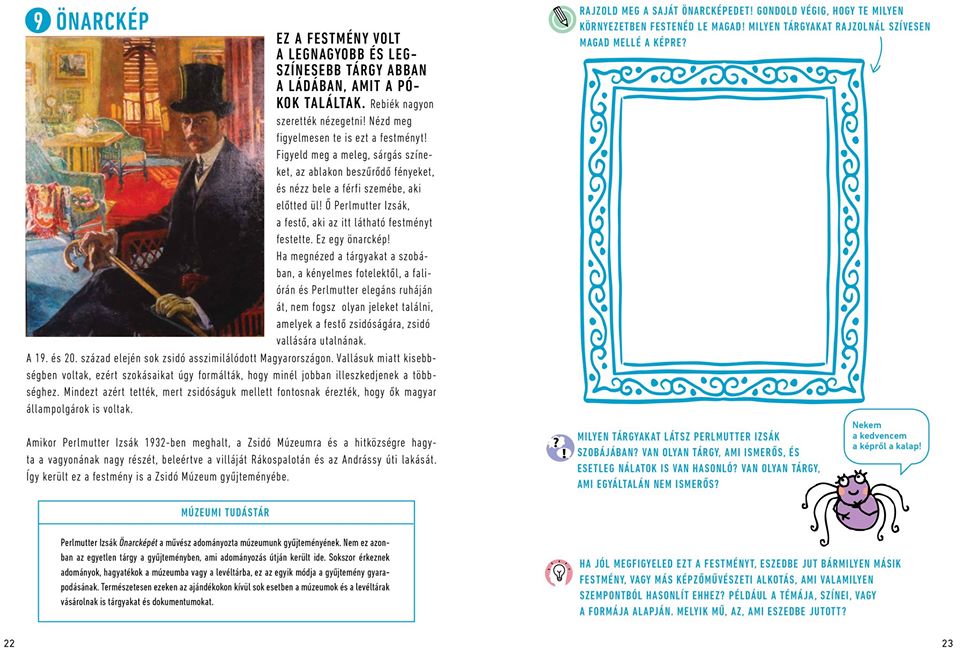 Dancz Vera: A kincsesláda titkai. Barangolás a Magyar Zsidó Múzeum és Levéltár gyűjteményében című foglalkoztató füzetéből. A videóban szereplő művek:
Párizsi háztetők, 1891 Holland lányok, 1900 k. Utcarészlet Hollandiában, 1902 Nyár Hollandiában, 1902 A festő rákospalotai otthona, 1910 Szalonban ülő nő, 1916 Őszibarackos csendélet, 1908 Cilinderes önarckép, 1910 Zene // Eric Satie: Gnossienne no. 5. Kurátorunk; Farkas Zsófia online kiállítása arról, hogy vajon miről tanúskodik egy olyan művész önarcképe, aki sok szempontból bezártságra kényszerült. Stílusa a primitív és a középkori (gótikus) művészetből táplálkozik. Sajó Edit festő- és szobrászművészt 31 évesen, testvéreivel együtt Auschwitzba deportálták, egyikük sem élte túl a háborút. Online exhibition by our curator Zsófia Farkas - about what an artist’s self-portrait proves who has been imposed to being quarantined by different reasons. Her style is based on the primitive and medieval gothic style. Edit Sajó painter and sculptor had been deported with her sibling at age 31 to Auschwitz, neither of them surviving the war.
A bezártság belső világunk vagy legszűkebb életterünk alapos vizsgálatára kényszerít, vagy ösztönözhet bennünket. A történelem során készült önarcképekkel az alkotók saját magukról vagy aktuális élethelyzetükről adtak, adnak mindmáig folyamatos helyzetjelentést. A Magyar Zsidó Múzeum és Levéltár gyűjteményében egy ilyen pillanatkép Sajó Edit önarcképe. Az ő pályájának mindössze 31 éves korában vetett véget a holokauszt. Sajó Edit – ars poéticának is tekinthető – festménye saját életterét, külső és belső világát ábrázolja. A zsidótörvények időszakában készült portrén keresztül egy fiatal, zsidó nőművész helyzetéről szerezhetünk benyomást. Ha jobban szemügyre vesszük a képet, észrevesszük, hogy a külső tér perspektívája nem valóságos, sőt, a tükörként vagy képkeretként is értelmezhető ablak nem elválasztja, hanem inkább összemossa a külvilágot a szoba terével. Vajon ez a szoba a művész valóságos élettere, esetleg inkább vágyainak, lehetőségeinek, korlátainak, vagy éppen művészi szabadságának egyfajta gyűjteménye? Ha megnézzük a fiatal lány kezét, láthatjuk, hogy egy kulcs van benne: ekkor döbbenünk rá, hogy ez a kép valójában egy megfejtésre váró rejtvényt, és nem egy valóságos szobát ábrázol. A képzeletbeli könyvespolc Sajó Edit érdeklődési körét jeleníti meg: számos vallástörténeti, filozófiai, természettudományos, vagy szépirodalmi kötet hangsúlyozza a művész intellektuális rátermettségét, tanultságát. Sőt, mintha Sajó széleskörű műveltségét fontosabbnak tartaná megjeleníteni, mint arcának vonásait. A kép valóságtól való elrugaszkodottságát, metaforajellegét legizgalmasabban magának az arcnak az ábrázolása fedi fel. Sajó Edit önmagát színes bőrű, gauguini figuraként jeleníti meg. A karcolt körvonalak, a maszkszerű arc, a merev tekintet így mintha nemcsak nőiségét, hanem származását is elfedné, elrejtené. Az önarckép így nemcsak a művész szellemi terének elképzelt ábrázolása, hanem a harmincas évek egyik lehetséges zsidó és női művészlétének kordokumentuma, lenyomata is. Sajó Edit: Önarckép Confinement can encourage or force us to examine our inner world, or our narrowest living space thoroughly. With self-portraits made throughout history, the creators have given a continuous status report of themselves or their current life situation. Such a snapshot is the self-portrait of Edit Sajó in the collection of the Hungarian Jewish Museum and Archives. Her career was ended by the Holocaust when she was merely 31 years old. The painting of Edit Sajó, that can also be considered as an ars poetica, portrays her own living space, her external and internal world. We can get an impression of the situation of a young, Jewish, artist woman through the portrait that was made during the anti-Jewish legislation. Taking a closer look at the picture we notice that the perspective of the outer space is not real, in fact, the widow that can be interpreted as a mirror or a picture frame does not separate the outside world from the space of the room, but rather blurs them. Is this room the real living space of the artist, or perhaps it is a kind of collection of her desires, possibilities, limits or artistic freedom? If we look at the young girl’s hand we can see that there is a key in it: this is when we realize that this picture is a puzzle to be solved and not a real room. The imaginary bookshelf shows Edit Sajó’s fields of interest: numerous religious historical, philosophical, science and belletristic volumes emphasize the intellectual competence and education of the artist. Moreover, it is as if it was more important for Sajó to display her extensive education than the features of her face. The picture’s deviation from reality and its metaphoric nature is most excitingly exposed by the depiction of the face itself. Edit Sajó portrays herself as a colored Gauguin figure. The scratched contours, the mask-like face, the stiff look thus seem to hide her femininity as well as her origins. The self-portrait is therefore not only the imagined portrayal of the artist’s intellectual space but also a document that can be a possible imprint of the Jewish and female artist life in the 1930s. (Translated by Eszter Cseh-Szilárd) Edit Sajó: Self-portrait |
Categories
All
Archives
September 2023
|
 RSS Feed